The holiday season brings joy, sparkle, and, for many cat owners, a unique challenge: the Christmas tree. Your feline friend views this towering, decorated marvel as an irresistible new playground, a giant scratching post, and a treasure trove of dangling toys. But how do you reconcile your cat’s natural instincts with a festive, safe, and intact Christmas tree? This guide, drawing on over a decade of pet product expertise, will help you navigate the holiday season, ensuring both your cherished decorations and your beloved cat remain happy and healthy.
Why Do Cats Love Christmas Trees So Much?
To a cat, a Christmas tree is an instinctual dream come true. Its height offers an ideal vantage point, fulfilling their natural desire to climb and observe their territory. The texture of pine needles or artificial branches provides an excellent scratching surface, while shimmering ornaments, lights, and tinsel mimic prey, inviting playful swatting and pouncing. This combination of height, texture, and movement taps directly into their predatory instincts and need for enrichment, making the tree an unavoidable magnet for feline curiosity.
Cat-Proofing Your Traditional Christmas Tree: A Step-by-Step Guide
Ensuring your holiday centerpiece is safe for your curious companion requires thoughtful planning. Here’s how to create a cat-proof Christmas tree without sacrificing festive cheer.
Choosing Your Tree Wisely
The first step in cat-proofing your Christmas tree begins with selection.
- Real vs. Artificial: Real Christmas trees, particularly pine needles, contain oils that can be mildly toxic if ingested, leading to stomach upset. Moreover, sharp needles can cause internal irritation or even obstruction. Tree water, often containing fertilizers and preservatives, is also highly toxic to cats and must be kept inaccessible. Artificial trees often reduce these risks, as they don’t shed toxic needles or require water additives. However, ensure artificial trees are made from non-toxic materials, and that shedding plastic needles are minimized.
- Needle Type: If choosing a real tree, opt for varieties with blunter needles, such as a Nordmann Fir, which are less likely to cause injury if chewed.
- Sturdy Base: Regardless of tree type, invest in a heavy, wide, and stable tree stand. A wobbly tree is an open invitation for a cat to test its balance, potentially leading to a dangerous topple. Consider anchoring the tree to the wall or ceiling with fishing line for added security.
Ensuring Stability
A stable tree is paramount for your cat’s safety.
- Anchor Your Tree: Use strong fishing line or wire to securely anchor the top of your tree to a nearby wall or ceiling. This prevents it from falling over if your cat attempts to climb or pounce on it.
- Strategic Placement: Position your tree in a corner or against a wall, away from furniture your cat might use as a launching pad.
Safe Decorations and Strategic Placement
|
Our Picks for the Best Cat Tree in 2026
As an Amazon Associate I earn from qualifying purchases.
|
||
| Num | Product | Action |
|---|---|---|
| 1 | Globlazer Heavy Duty Cat Tree, 70 inch Sturdy Cat Tree for Indoor Cats Extra Large Cat Tower with Scratching Post, Hammock, Cat Condo for Adult Cats Kittens, F70 Pro, Light Grey |

|
| 2 | Heybly Cat Tree with Toy, Cat Tower Condo for Indoor Cats, Cat House with Padded Plush Perch, Cozy Hammock and Sisal Scratching Posts, Smoky Gray HCT004SG |
|
| 3 | Hey-brother Wooden Cat Tree, 69.7 inch Cats Furniture Tower with Large Platforms, Hammocks, Spacious Condo, Full Sisal Scratching Posts, Ladder, Brush, Water Proof Surface, Rustic Brown MPJ121SR |
|
| 4 | Amazon Basics Cat Tree for Indoors Cats, Multi-Level Cat Tower Cat Condo with Scratching Post, Cozy Hammock and Perches for Adult Cats, Interactive Dangling Ball, L – 60.1” (152.7cm) H, Grey |
|
| 5 | YUNIQUE Cat Tree with Cat Condo and Big Hammock, Grey |
|
| 6 | 37.4" Cactus Cat Tree Tower with Twin Cat Condos for Indoor Cats, All-in-One Activity Center with Cat Scratching Post Cozy Sleeping Perch Hammock and Toy Balls,Green … |
|
| 7 | Amazon Basics Cat Tree - Indoor Cat & Kittens Multi-Level Climbing Activity Tower with Scratching Posts, Large (45.9"H) - Beige |
|
| 8 | Feandrea Cat Tree, 59.5-Inch Tall Cat Tower, Plush Multi-Level Condo with 5 Scratching Posts, 2 Perches, 2 Caves, Hammock, 2 Pompoms, Light Gray UPCT192W01 |
|
| 9 | Xin Three Layer Cat Tree with Cat Condo and Two Hammocks,Grey |
|
| 10 | Globlazer Heavy Duty Cat Trees for Large Cats, Sturdy 72in Maine Coon Cat Tree for Large Cats 20 lbs+ Heavy Duty Cat Tower for Adult Biggest Cat with 6 Scratching Posts, Hammock, S72, Dark Gray |
|
Decorations are often the biggest temptation for cats.
- Shatterproof Ornaments: Avoid glass or easily breakable ornaments, which can cause serious cuts if shattered. Opt for shatterproof, wooden, felt, or plastic decorations instead.
- No Tinsel: Tinsel is incredibly dangerous. If ingested, its shiny, string-like nature can cause severe intestinal blockages that often require emergency surgery and can be fatal.
- Secure Ornaments: Attach ornaments tightly to the branches, deep within the tree, rather than dangling loosely where they can be easily batted off. Use floral wire or pipe cleaners instead of traditional metal hooks, which can also be a choking hazard.
- Decorate the Top: Place your most precious or fragile ornaments higher up, out of your cat’s reach, leaving the lower branches sparsely decorated or with only cat-safe items.
- Avoid Edible Decorations: Candy canes, gingerbread, or other food-based ornaments will only attract your cat and are often toxic.
Lighting Safety
Christmas lights add a magical glow, but pose electrocution risks.
- Conceal Wires: Ensure all light wires are tightly wrapped around branches and hidden as much as possible. Use cord protectors or tape wires to the floor to prevent chewing.
- Unplug When Unsupervised: Always turn off and unplug your Christmas lights when you’re not home or when you go to bed. Battery-operated lights can be a safer alternative as they eliminate dangling cords.
- Avoid Blinking Lights: Rapidly blinking or twinkling lights can entice cats, signaling playtime.
Deterrents and Barriers
Sometimes, a little extra persuasion is needed to keep cats away.
- Scent Repellents: Cats generally dislike citrus scents. Place orange or lemon peels in plastic baggies around the tree’s base, or use a pet-safe citrus spray. Pine cones can also be placed around the base.
- Foil Barrier: Wrapping the base or lower trunk of the tree in aluminum foil can deter cats, as they dislike the texture and sound under their paws.
- Physical Barriers: For persistent climbers, a pet gate or baby fence around the tree can be an effective, albeit less aesthetic, solution.
Water Safety
Real trees require water, but this water is a hidden danger.
- Cover the Tree Stand: Always cover your tree stand water with a tree skirt or foil to prevent your cat from drinking it, as it may contain toxic sap, fertilizers, or preservatives.
Toxic Plants to Avoid
Beyond the Christmas tree, many festive plants are toxic to cats.
- Mistletoe, Poinsettias, and Ivy: These popular holiday plants are harmful if ingested and should be kept out of reach or avoided entirely. Opt for pet-friendly alternatives like Christmas cacti or orchids if you want additional greenery.
“A good Cat Tree isn’t just a play area; it’s a place where cats feel safe and comfortable.” – ReviewNeka.com Admin
Embracing the Festive Feline: Cat-Friendly Christmas Tree Alternatives
If cat-proofing a traditional tree feels like an uphill battle, or if you simply want to offer your cat their own festive space, consider these creative alternatives.
Dedicated Cat Christmas Trees
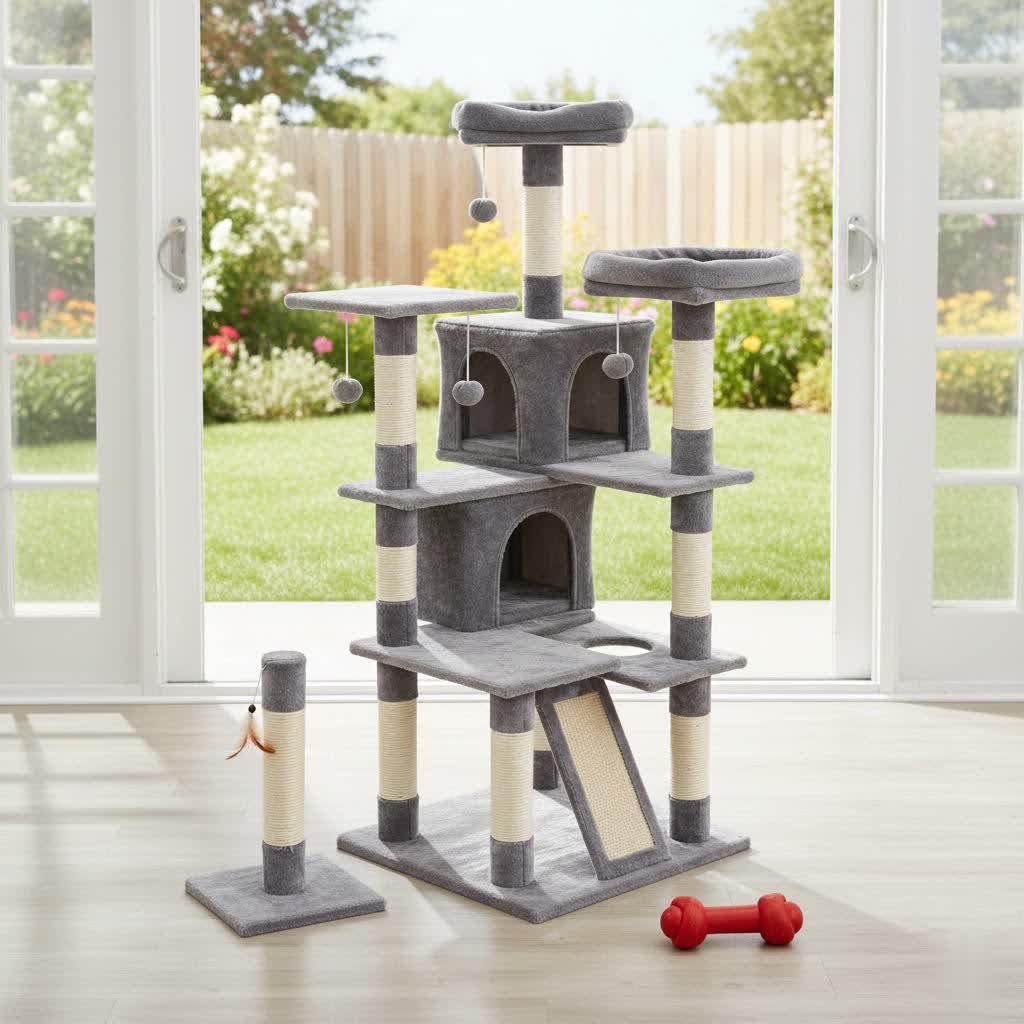
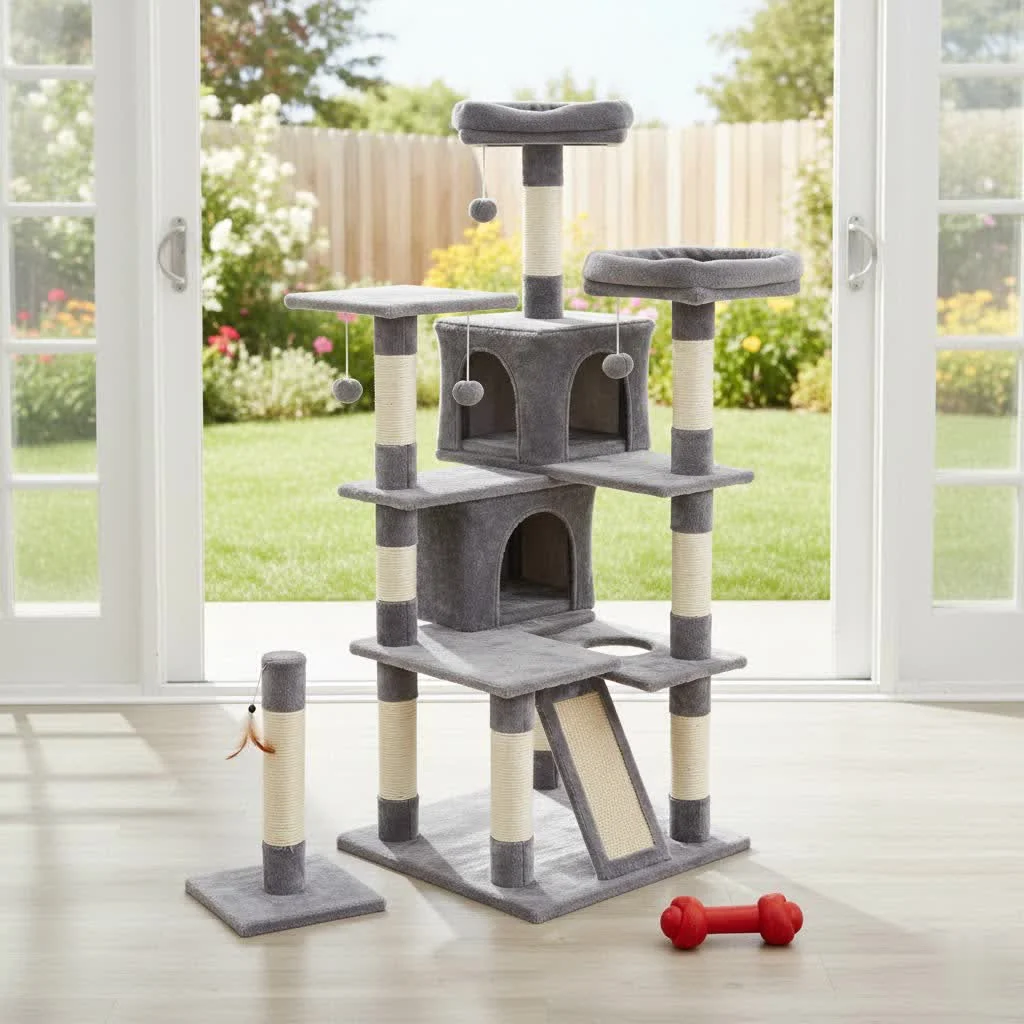
The market now offers innovative “Cat Christmas Trees” – functional cat trees designed with a festive aesthetic. These typically feature multiple levels for climbing, cozy hideaways, and sisal scratching posts, all wrapped in forest green or holiday-themed fabrics. They provide a safe, designated climbing and scratching outlet that satisfies your cat’s instincts without endangering your main holiday decor. These products are built to be climbed and explored, offering both festive cheer and year-round functionality.
DIY Cat Christmas Trees and Wall-Mounted Options
Get creative with DIY solutions!
- Decorated Cat Trees: Transform your existing cat tree into a festive focal point. Wrap its posts in pet-safe burlap instead of tinsel, and hang lightweight fabric ornaments securely with short strings. Use battery-powered LED string lights wrapped tightly around the posts, ensuring no loose wires.
- Wall-Mounted “Trees”: Create a flat, wall-mounted tree sculpture from non-toxic wood or felt. This eliminates climbing temptation while still allowing for festive decoration with embedded lights or soft ornaments.
- Potted Non-Toxic Plants: For a more natural feel, non-toxic potted plants like parlor palms or baby rubber plants can offer a touch of green without the risks of traditional evergreens.
Training Your Cat for a Peaceful Holiday Season
Patience and consistency are key to teaching your cat how to coexist with your festive decor.
- Early Introduction: Set up your tree a few days before decorating, allowing your cat to get used to its presence.
- Positive Reinforcement: Reward your cat with treats and praise when they interact appropriately (e.g., sniffing gently from a distance) or use their own designated scratchers/cat trees.
- Distraction: Provide plenty of alternative toys, scratching posts, and engaging play sessions to divert their attention from the Christmas tree.
- Catnip: Strategically place catnip on their own cat tree or toys to make them more appealing than the forbidden Christmas tree.
Cleaning and Maintenance for a Cat-Friendly Christmas
Maintaining a clean holiday environment is crucial for your cat’s health.
- Regular Vacuuming: Frequently vacuum around the tree to pick up fallen needles (real or artificial) that could be ingested or cause paw irritation.
- Safe Cleaning Solutions: If any spills or accidents occur, use pet-safe cleaning solutions to avoid exposing your cat to harmful chemicals.
- Inspect Decorations: Regularly check ornaments and lights for any damage that could pose new hazards. Replace or remove any compromised items.
Conclusion
Creating a cat-friendly Christmas tree environment is a thoughtful investment in your feline companion’s well-being and happiness during the festive season. By understanding your cat’s natural inclinations and implementing strategic safety measures, from securing your traditional tree to embracing dedicated cat Christmas trees, you can ensure a joyful and peaceful holiday for everyone. Remember, your cat’s safety and comfort are paramount, transforming what could be a stressful time into one filled with shared warmth and festive memories.
What creative ways have you found to blend your love for Christmas with your cat’s playful spirit?
Frequently Asked Questions
Are real Christmas trees toxic to cats?
Yes, real Christmas trees can be mildly toxic to cats. Pine needles contain oils that can cause mouth irritation and stomach upset if ingested, leading to vomiting or diarrhea. Additionally, the water in the tree stand, often containing fertilizers and preservatives, is highly toxic and should be covered to prevent ingestion.
How can I stop my cat from climbing the Christmas tree?
To deter cats from climbing, ensure the tree is stable and anchored to a wall or ceiling. Use deterrents like aluminum foil around the base or citrus scents. Provide attractive alternatives like a dedicated cat tree or scratching post. Consistent positive reinforcement and distraction with other toys can also help.
What are safe ornaments for cats?
Safe ornaments for cats are typically shatterproof and non-toxic. Opt for items made from wood, felt, fabric, or sturdy plastic. Securely attach ornaments deep within the branches using wire or pipe cleaners instead of hooks. Avoid tinsel, glass ornaments, and any small, easily swallowed items.
Can I use tinsel if I have a cat?
No, tinsel should be avoided entirely if you have a cat. Its shiny, string-like appearance makes it irresistible to cats, but if ingested, it can cause severe linear foreign body obstructions in their intestines, requiring emergency surgery and potentially leading to fatal complications.
Pet products vetted on real animals
Practical specs, not advice. Unsubscribe anytime.
